 1322 W. Kathleen Ave., Suite 1, Coeur d'Alene, Idaho 83815
 208.518.0770
Why Floss Sometimes Gets Stuck in Your Teeth
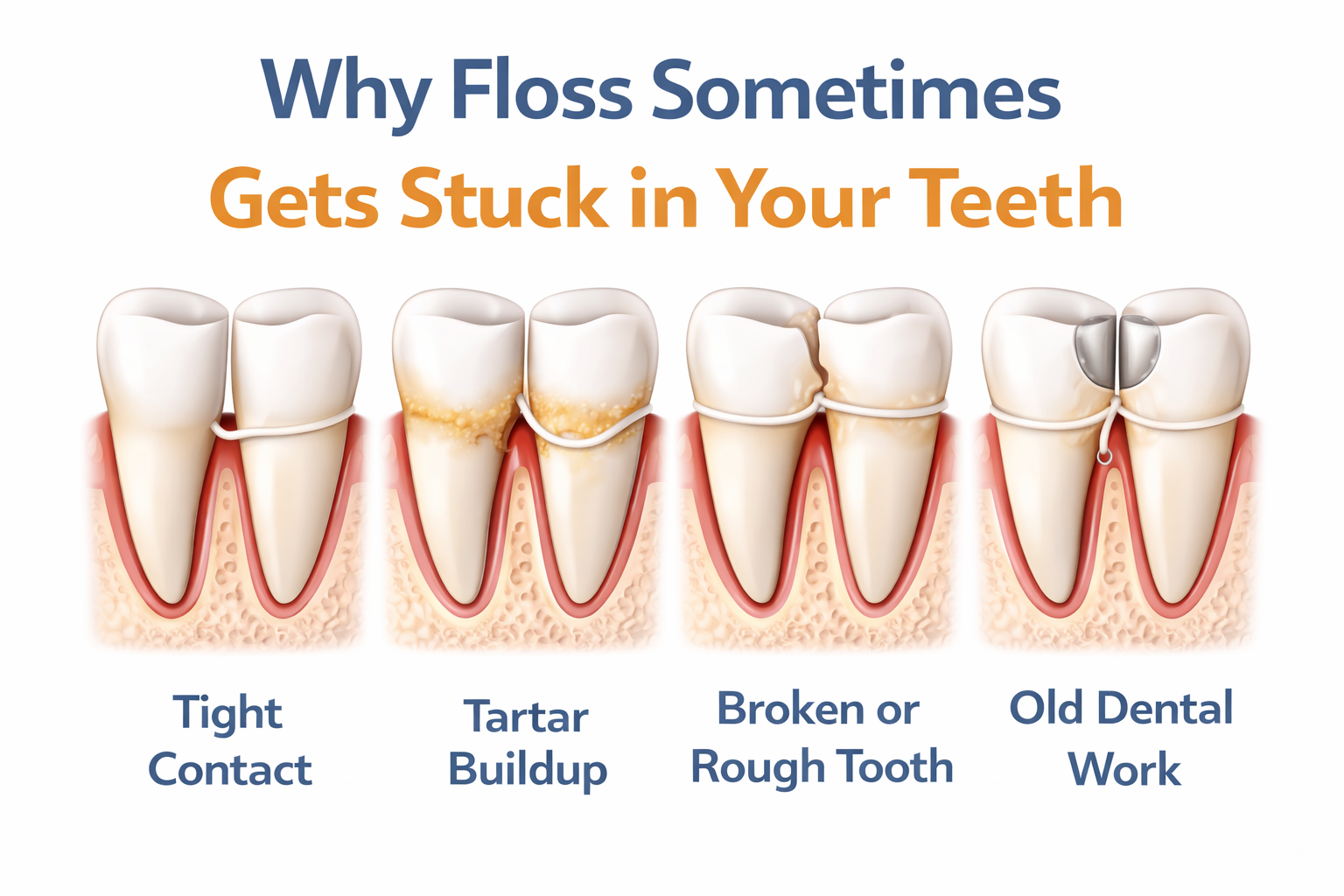
Most people have been there: you’re going through your nightly routine, feeling good about flossing, and then the floss just won’t budge between two teeth. Maybe it even shreds or gets stuck. If you’ve ever thought, “Why can’t I get floss between my teeth?” or “Floss can’t get between teeth after a filling,” you’re not alone. This is a common issue and can be frustrating—especially when you’re just trying to keep your mouth healthy. Let’s talk about why this happens, what it might mean, and what you can do about it.
Key Takeaways
- Floss getting stuck can be caused by tight teeth, rough edges from fillings, or plaque buildup.
- If you can't get floss between teeth, especially after dental work, it could be a sign something needs checking.
- Using the right flossing technique and choosing the right type of floss can help prevent snagging.
- Helpful tools like floss picks, threaders, or water flossers can make flossing easier, especially for back teeth.
- If floss is always getting stuck or won't go between teeth, visit your dentist to rule out bigger problems.
Why Flossing Matters for Oral Health
Many people think brushing their teeth is enough to keep their mouth healthy. While brushing is super important, it doesn't quite reach everywhere. There are tiny spaces between your teeth and along the gum line where food bits and plaque love to hang out. Brushing alone just can't get those spots clean.
This is where flossing comes in. Flossing is just as vital as brushing for keeping your mouth in good shape. When you don't floss, that trapped food and plaque can turn into a sticky film called tartar. Tartar buildup is a big contributor to cavities and gum disease. Plus, all those little bits of food and bacteria hanging around can cause bad breath.
Think of it this way:
- Brushing cleans the surfaces of your teeth.
- Flossing cleans the sides of your teeth and gets down to the gum line.
- Together, they give your teeth a much more thorough clean.
Regular flossing helps prevent cavities from forming in those hard-to-reach places and keeps your gums healthy. It also helps cut down on the bacteria that cause unpleasant odors, leaving your mouth feeling fresher.
Skipping floss means you're missing a key step in cleaning your mouth. It's a simple habit that makes a big difference in preventing common dental problems and keeping your smile healthy long-term.
Common Reasons Floss Gets Stuck Between Teeth
It can be frustrating when you're trying to do something good for your mouth, like flossing, and the floss just won't cooperate. You might find yourself wondering, "Why can't I get floss between my teeth?" or "Why can't I get dental floss between my teeth?" There are several common culprits behind this snagging issue.
One of the main reasons floss can't get between teeth is simply the natural shape and spacing of your teeth. Some people have naturally tight contacts where their teeth meet, leaving very little room for the floss to slide through easily. It's like trying to push a thick rope through a narrow gap.
Another frequent cause is the condition of your teeth's surfaces. If you have plaque buildup between your teeth, it can create a rougher surface that catches the floss. This is especially true if you can't get floss between back teeth because these areas can accumulate more plaque over time. Similarly, if you've had dental work done, like a filling or a crown, and the edges aren't perfectly smooth, the floss can catch on these slightly rough spots. This can happen even if you could floss there just fine before the dental work, leading to the "can't get floss between teeth after filling" scenario.
Here are some common factors that contribute to floss getting stuck:
- Tight Tooth Spacing: Some individuals naturally have very little space between their teeth.
- Plaque Buildup: Accumulated plaque can make the surfaces between teeth rougher and narrower.
- Rough Dental Restorations: Fillings, crowns, or bridges with uneven edges can snag floss.
- Tooth Irregularities: Natural contours or minor imperfections on tooth surfaces can catch the floss.
Sometimes, the type of floss you're using can make a difference. Waxed floss generally glides more smoothly than unwaxed floss, which might be more prone to snagging on rough spots. If you're struggling, trying a different type of floss might help you find a better fit.
It's important to remember that if floss consistently gets stuck in a particular spot, it might be a sign that something needs attention. This could be a rough edge on a tooth or a restoration, or even the early stages of decay. Informing your dentist about this issue is a good idea.
Don't get discouraged if you can't get floss between teeth. With a little understanding of why it's happening, you can often find a way to floss effectively.
When Stuck Floss Could Signal an Oral Health Concern
Most of the time, floss getting stuck is just a minor annoyance. It might happen if your teeth are a bit crowded, or maybe you hit a rough spot on a tooth. But sometimes, floss that gets lodged and won't budge could be a sign that something else is going on in your mouth.
Persistent floss-snagging might point to issues like plaque buildup or even a cavity. When plaque hardens into tartar, it can create rough edges between teeth that catch the floss. Similarly, if a tooth has decay, the surface can become uneven, making it difficult for floss to slide through smoothly. Dental work, like crowns or fillings that are starting to wear down, can also create ledges or rough spots where floss can get caught.
If you find floss repeatedly getting stuck, especially in the same spot, it's worth paying attention to. Leaving it there can cause problems:
- Gum irritation: The floss can rub against your gums, making them red, swollen, and sore.
- Bad breath: Trapped food particles and plaque around the stuck floss can lead to unpleasant odors.
- Increased risk of cavities and gum disease: The area where the floss is stuck can become a breeding ground for bacteria, making it harder to clean and increasing the chance of decay or gum inflammation.
If you've tried gentle methods to remove the floss and it's still stuck, or if this is happening frequently, it's a good idea to schedule a visit with your dentist. They have the right tools and knowledge to safely remove it and can check if there's an underlying issue, like decay or a problem with existing dental work, that needs attention. Ignoring it could lead to more significant dental problems down the road.
How to Floss Properly to Prevent Snagging
It might seem straightforward, but there's a knack to flossing that helps keep it from getting stuck. The main thing is to be gentle and avoid forcing the floss. Instead of snapping it between your teeth, which can cause it to shred or get wedged, try a more controlled approach.
Start with a good length of floss, maybe about 18 inches. Wrap most of it around one of your middle fingers, and the rest around the same finger on the other hand. This gives you plenty of clean floss to work with. Use your thumbs and index fingers to guide the floss.
When you bring the floss between your teeth, ease it in gently. Don't just push hard. Once it's between the teeth, curve the floss into a "C" shape against one tooth. Gently slide it up and down, making sure to go slightly below the gum line. This is where a lot of plaque hides. Then, do the same for the other tooth in the gap, again curving the floss and sliding it gently. Remember to use a fresh section of floss for each space between your teeth.
Take your time is probably the best advice here. Rushing is how most problems happen. If you have teeth that are naturally close together, you might need to be extra careful. A gentle sawing motion can help guide the floss through tight spots without forcing it.
If the floss still seems to get stuck, especially when you're trying to remove it, try letting go of one end and pulling it out to the side instead of pulling it back through the tight spot. This often works wonders.
Flossing once a day is the goal. Doing it before bed is a good habit because it removes all the day's buildup before you sleep. It doesn't really matter if you floss before or after brushing, as long as you do it regularly. The key is consistency and proper technique to keep your gums healthy and your teeth clean.
Helpful Tools If Flossing Is Difficult
Sometimes, even with the best intentions, regular floss can be a bit of a challenge to maneuver, especially if you have braces, bridges, or just really tight spaces between your teeth. Don't let that stop you from keeping those areas clean, though! There are some handy tools out there that can make a big difference.
For starters, consider trying waxed floss. It's often smoother and less likely to shred or get snagged compared to unwaxed varieties. If you're dealing with braces or other dental work, a floss threader can be a lifesaver. These are small, flexible loops that help you guide the floss under wires or around brackets. You simply thread the floss through the loop and then use the threader to pull it into place.
Another great option is a water flosser, also known as an oral irrigator. These devices use a stream of water to clean between teeth and along the gumline. They can be particularly effective for removing food particles and plaque, especially around dental work, and many people find them easier to use than traditional floss. Some models even have different pressure settings, which can be helpful if you have sensitive gums.
If you're still struggling, don't hesitate to ask your dental professional about other aids. They might suggest interdental brushes, which are like tiny pipe cleaners for your teeth, or even specialized floss picks designed for hard-to-reach areas. Finding the right tool can make all the difference in maintaining your oral hygiene routine.
It's important to remember that the goal is to clean between your teeth effectively. If traditional floss is causing frustration or getting stuck frequently, exploring these alternative tools is a smart move. They are designed to help you overcome common flossing hurdles and keep your smile healthy.
Wrapping Up: Keeping Your Smile Floss-Friendly
So, while it can be a bit annoying when floss gets stuck, remember it's usually a sign that something needs a little attention. Whether it's a tight spot, a rough edge, or just a technique tweak, understanding why it happens is the first step. Don't let a stuck piece of floss discourage you from this important part of your daily routine. Gentle technique, the right floss, and regular dental visits are your best bet for keeping things smooth sailing between your teeth. If you ever find yourself struggling to get floss out, or if it happens often, don't hesitate to ask your dentist or hygienist for advice at your next check-up. They can help pinpoint the cause and offer personalized tips to keep your smile healthy and floss-free (in the best way possible!). Contact Coeur d'Alene Dental Center today and take the first step toward a healthier, more confident smile.
Frequently Asked Questions
Why does floss get stuck between my teeth?
Floss can get stuck for a few reasons. Your teeth might be packed very closely together, leaving little room for the floss to move. Sometimes, rough spots on your teeth, like from a filling or a natural unevenness, can catch the floss. Also, if there's a lot of plaque or food bits stuck between your teeth, the floss can get trapped by them.
What should I do if floss gets stuck?
Don't panic or yank it out forcefully! Try gently wiggling the floss back and forth in the direction it came from. Sometimes, changing the angle slightly can help it slide free. If it's really stuck, it might be best to try and carefully ease it out to the side rather than pulling it straight back through.
Can leaving floss stuck cause problems?
Yes, it can. If floss stays stuck between your teeth, it can irritate your gums, leading to redness and soreness. It also creates a place where bacteria and food can gather, which can cause bad breath, plaque buildup, and even increase the risk of cavities or gum problems over time.
How can I prevent floss from getting stuck in the first place?
Using the right technique is key. Be gentle and avoid snapping the floss between your teeth. Instead, guide it slowly with a back-and-forth motion, curving it around each tooth. Using waxed floss might also help it glide more smoothly. Taking your time and not rushing can make a big difference.
Does the type of floss matter?
It can! Some people find that waxed floss slides more easily between tight teeth compared to unwaxed floss, which might be more prone to catching. There are also different types like dental tape or floss with extra coatings that might work better for certain people. Experimenting to find what works best for your mouth is a good idea.
When should I see a dentist about stuck floss?
If you've tried gentle methods to remove the floss and it's still stuck, or if it happens frequently, it's a good idea to see your dentist. They can safely remove it and check if there's an underlying issue, like a rough tooth surface, a filling problem, or significant plaque buildup that needs attention.
Blog Post Author

Contributed by DentalROI
DentalROI provides relevant dental content to help providers educate patients. The statements, services, and products referenced in this article have not been evaluated by the Food and Drug Administration, and they are not intended as a substitute for professional medical advice, diagnosis, or treatment. Always seek the advice of your dental provider with any questions or issues you may have. Specific recommendations may vary in different circumstances, so individual consultation is important.

